
Published February 18, 2026 • ← Back to Blog
Adding a deck is one of the best investments you can make in your home. In the Lynchburg metro area, where mild spring and fall weather stretches across several months, outdoor living space gets real use, from April cookouts through November football Sundays. But before you start buying lumber and drawing up plans, you need to understand what Bedford County (and neighboring jurisdictions) require in terms of permits and building codes. Skipping this step can cost you far more than the permit fee.
Do You Need a Permit?
Yes, and Bedford County's own answer is unusually blunt about it. The county's Residential Projects FAQ states: "building permits are required for new and reconstructed decks." There is no size exemption and no height exemption. A 10 by 10 ground level platform is treated the same as a second story deck off the kitchen.
That surprises people, because a widely repeated rule of thumb says a deck under 200 square feet and less than 30 inches above grade is exempt. That threshold comes from the model International Residential Code. Virginia did not adopt it. The Uniform Statewide Building Code list of work exempt from a permit covers tool and storage sheds and playhouses that do not exceed 256 square feet, fences of any height unless they serve as a pool barrier, and replacement roofing, siding and same size windows on a single family home. Decks are not on it, and Bedford County's permits FAQ lists "constructing/replacing a deck and/or ramp" under work that requires one.
Zoning setbacks are a separate layer on top of the building permit, and they depend on your parcel's zoning district. Confirm both before you order materials.
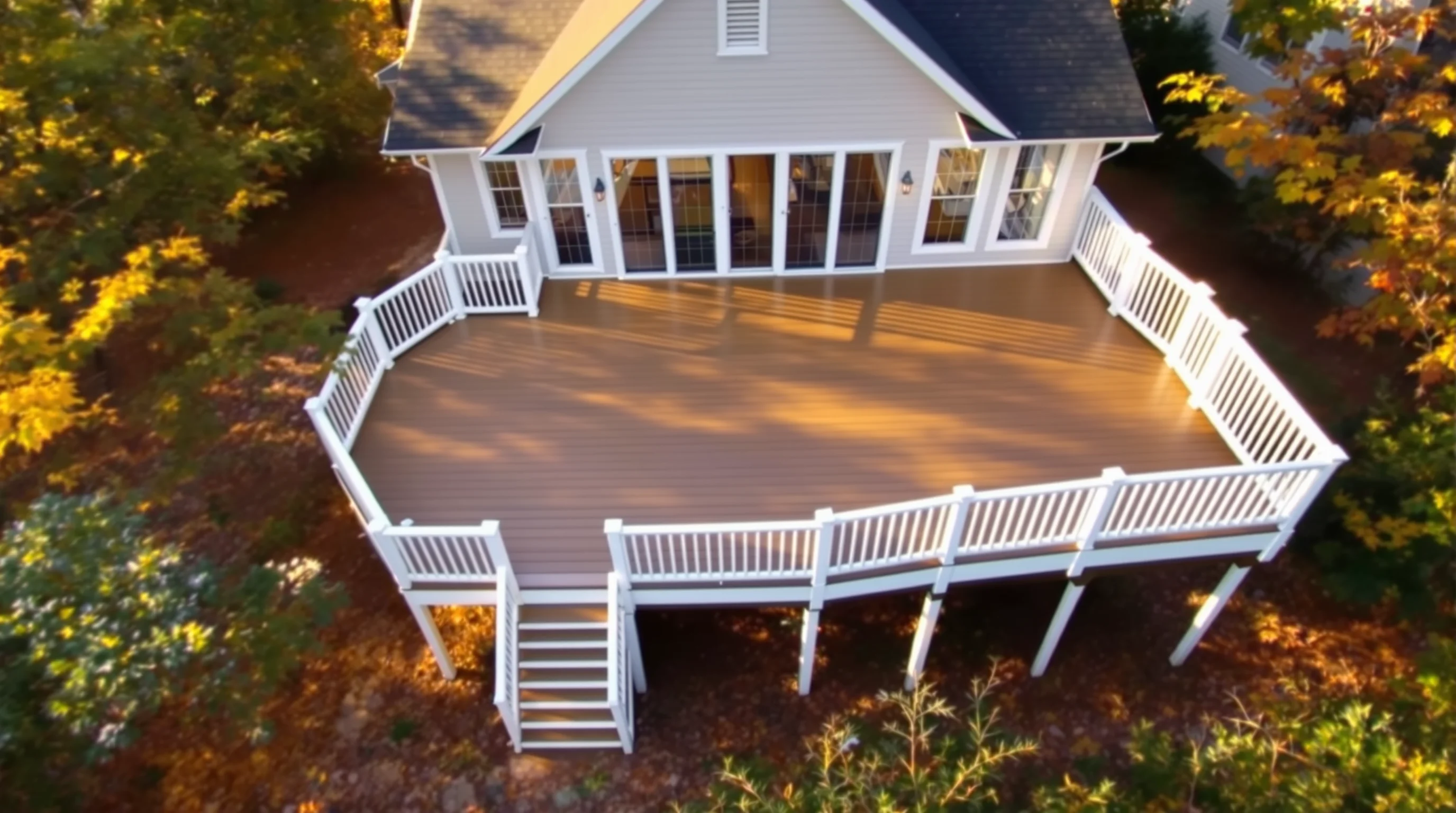
A deck added to an existing house adds square footage, so it is billed as an addition. Bedford County's Building Division fee schedule sets additions at the same rate as the use group of the structure. A single family home is Use Group R-5, which is 18 cents per square foot with a $25 minimum, and residential single family plan review is a further $25. Run those published rates against a 320 square foot deck, 16 by 20, and the county schedule gives $57.60 plus the $25 review. That is the county's fee, not a price for the work, which your builder quotes separately.
One trap if you read the schedule yourself. It also lists docks at 12 cents per square foot with a $50 minimum. That line is for boat docks, the Smith Mountain Lake kind, not for decks, and the two get mixed up constantly. The building official classifies the structure, so call the Building Inspections office at 540-586-7616 if your project is unusual.
What Happens If You Skip the Permit
This comes up constantly. A buddy offers to build your deck for cash, no permit, save you some money. Here is what can actually happen:
- Insurance problems. If someone gets injured on an unpermitted deck, a guest falls through a railing, a board gives way, your homeowner's insurance can deny the claim. They will send an adjuster, the adjuster will check permit records, and an unpermitted structure gives them grounds to refuse coverage. That is not a theoretical risk. It happens.
- You cannot sell your house cleanly. Virginia requires sellers to disclose known material defects, and an unpermitted structure qualifies. When a buyer's home inspector finds a deck with no permit on record, it becomes a negotiation issue, they will either demand you get it retroactively permitted (which means it has to pass inspection as-built, and it often does not) or they will ask for a price reduction. Some buyers walk away entirely.
- The county can make you tear it down. Bedford County building officials have the authority to issue a stop-work order and require removal of unpermitted structures that do not meet code. This is rare for a backyard deck, but it does happen, especially if a neighbor files a complaint or if the deck is too close to a property line or easement.
The permit costs less than a nice dinner out. Just pull the permit.
The Permit Process Step by Step
The process involves submitting a site plan showing the deck's location on your property, a construction drawing with dimensions, and details about the materials and fasteners you plan to use. The county reviews your plans for compliance with the Virginia Uniform Statewide Building Code (VUSBC), which follows the International Residential Code with Virginia-specific amendments.
Once approved, expect three inspection stages:
- Footing inspection: Before you pour concrete. The inspector verifies that holes are dug to the correct depth (below frost line) and that the soil bearing conditions look adequate. This happens before any concrete goes in.
- Framing inspection: After the structural frame is up but before the decking boards go on. The inspector checks post-to-beam connections, joist hangers, ledger board attachment, and overall structural integrity.
- Final inspection: Everything complete: decking, railings, stairs, hardware. The inspector checks railing height, baluster spacing, stair dimensions, and all fastener types and spacing.
Each inspection typically takes one to two business days to schedule. A good contractor builds the inspection schedule into the project timeline so there is no wasted downtime waiting around.
Key Code Requirements That Trip People Up
Several code requirements catch homeowners and inexperienced builders off guard:
- Footings. Bedford County's own footing requirements sheet quotes R403.1.4: every exterior footing goes at least 12 inches below undisturbed ground, and where frost protection applies it extends below the frost line in Table R301.2(1). Here is the part almost nobody knows: exception 3 on that same sheet says "decks not supported by a dwelling need not be provided with footings that extend below the frost line." So a freestanding deck still needs a permit, but not frost depth footings. An attached one needs both. Confirm your case with the office, because it turns on whether the deck loads your house.
- Ledger boards must be properly flashed and lag-bolted (not nailed) to the house rim joist. This is not negotiable.
- Guards are required where the walking surface sits more than 30 inches above the grade below
- Guard height on a one or two family home is at least 36 inches. The 42 inch figure people quote comes from the commercial code, and it does not apply to your house. This is set statewide, so it does not change between Lynchburg City and the surrounding counties
- Baluster spacing cannot exceed 4 inches, the "soda can test" is a quick way to check
- Stairs need proper rise and run dimensions (max 7.75-inch rise, min 10-inch run) and must have a graspable handrail between 34 and 38 inches high
The Ledger Board Problem
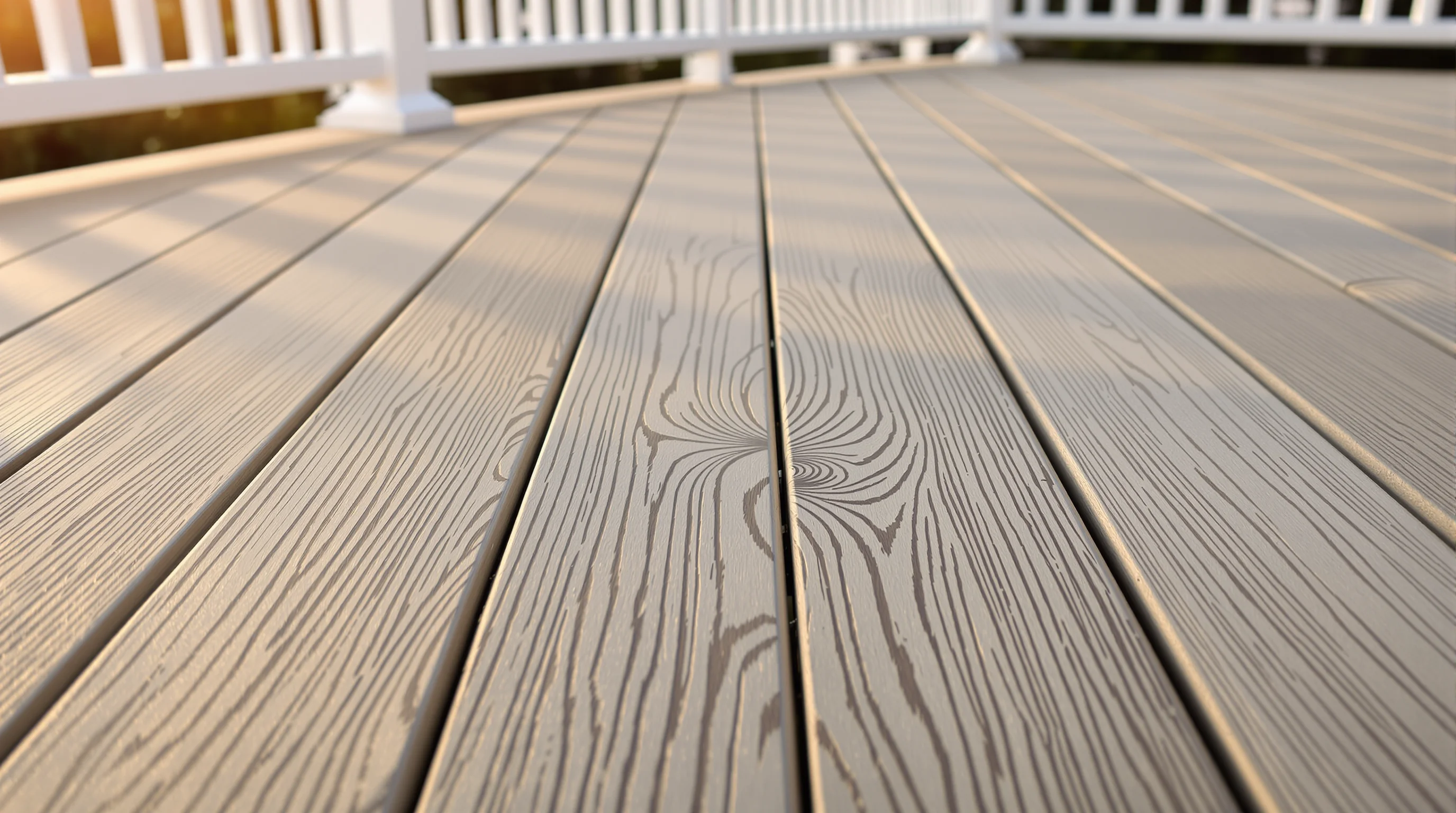
The ledger board connection deserves its own section because it is the number one cause of deck collapses in the United States. The ledger is the board that attaches the deck to your house. When it fails, the entire deck peels away from the structure, usually with people standing on it.
The failure mode is almost always the same: water gets behind the ledger, rots the rim joist or band board of the house, and the lag bolts pull out of softened wood. This happens over years, invisibly, until the deck separates catastrophically.
Proper ledger installation requires removing the siding where the ledger attaches, installing a self-adhering waterproof membrane on the sheathing, then a metal Z-flashing that tucks up under the siding above and extends over the top of the ledger board. The ledger itself gets through-bolted or lag-bolted with stainless steel or hot-dipped galvanized hardware at specific spacing intervals (typically 16 inches on center, staggered top and bottom).
If a contractor proposes nailing the ledger to the house, or does not mention flashing at all, find a different contractor. This is a life-safety issue.
City of Lynchburg vs. Bedford County vs. Campbell County
If your property is in the City of Lynchburg rather than Bedford County, the process is similar but goes through the city's Permitting Center at 900 Church Street, first floor, at 434-455-3910. Lynchburg's list of work that requires a building permit names decks directly. The extra step in the city is historic district review: properties in a designated district can need a Certificate of Appropriateness before the building permit stage, which adds time to the front of the project rather than the end.
Campbell County handles permits through their Building Inspections department in Rustburg. The code requirements are identical, because every Virginia locality enforces the same statewide code, but each county sets its own fee schedule, so check Campbell County's rather than assuming Bedford's applies. Amherst County has its own building inspection office as well.
The key difference between jurisdictions is not the rules, it is administration. Every Virginia locality enforces the same statewide code, so the technical requirements for your footings and railings do not change when you cross the county line. What changes is the office, the fee schedule and the scheduling. Bedford County books inspections for the next business day when the request comes in before 4 p.m., unless request volume exceeds what they can cover, and stops accepting new permit applications at 4 p.m. as well. Ask your builder what the current plan review turnaround is when you sign, because it moves with the season.
Choosing Materials for Blue Ridge Weather
Material choice matters a lot in this region. Our combination of summer humidity (regularly above 75%), winter freeze-thaw cycles, and heavy spring rain creates a tough environment for outdoor wood structures.
- Pressure-treated pine remains the most affordable option at $2 to $4 per linear foot for decking boards. It holds up well when properly maintained. Plan on staining or sealing every two to three years, skip a cycle, and you will see cupping, splitting, and graying. It is a solid choice if you are budget-conscious and willing to do regular upkeep. Installed, published national figures for 2026 put pressure-treated at roughly $25 to $40 per square foot once footings, framing, railing and labour are counted, and complexity, height and railing choices move it within that band.
- Composite decking is where most of the market has moved. The three brands you will encounter most often locally are Trex, TimberTech, and Fiberon. Here is how they compare:
- Trex Enhance (their mid-range line) runs about $3.50 to $5 per linear foot for the boards. Good color selection, solid 25-year warranty, widely available at local lumber yards.
- TimberTech AZEK is a PVC product (not wood-composite) that handles moisture better than any competitor. Runs $5 to $8 per linear foot. If your deck is in a shaded, damp spot, common in Forest where tree canopy is heavy, AZEK is worth the upcharge.
- Fiberon offers competitive pricing ($3 to $5 per linear foot) with similar performance to Trex. Their Concordia line has gotten good reviews for color stability.
Published estimates put a composite deck of that footprint well above a pressure-treated one, and national figures for 2026 run from roughly $35 to $70 per square foot installed depending on the grade. More expensive upfront, but zero staining, no splinters, and no rot for 25 years or longer. We do not price deck work ourselves, so treat any figure here as background for reading a quote rather than as a quote.
Hardwoods like ipe or mahogany are beautiful and naturally resistant to rot and insects, but they are expensive ($8 to $14 per linear foot for boards alone) and harder to work with, they require pre-drilling for every fastener. Most homeowners in the area find composite offers a better balance of durability and value.
Best Time to Build in the Blue Ridge
Spring (March through May) and fall (September through November) are the ideal build seasons in this area. Summer is doable but the heat and afternoon thunderstorms slow things down. Winter construction is possible, concrete can be poured in cold weather with additives, but frozen ground makes footing excavation harder and more expensive.
If you want your deck ready for summer use, start the planning and permit process in January or February. That gives time for plan review, material ordering and weather delays. Composite decking in a popular color is the item most likely to sit on backorder, so ask your builder to confirm lead time with the supplier before you fix a date. Contractors in the Lynchburg area book up fast once warm weather arrives, so early planning gives you better scheduling options.
Hire a Contractor Who Handles Permits
A reputable deck builder will pull permits, schedule inspections, and make sure everything is code-compliant as a standard part of their service. If a contractor suggests skipping the permit process to save time or money, that is a major red flag, it usually means they are not confident their work will pass inspection.
We work with deck builders across the Lynchburg metro area who handle the entire process, from design and permits through construction and final inspection. Get in touch for a free estimate and let someone else worry about the code book.
Building a Deck This Spring?Get a Free Deck Estimate
Decks in our network go through Eric Farr, a Lynchburg general contractor who also covers windows, siding and pergolas, listed on our contractors page. We connect you with deck builders in the Lynchburg area who pull the permit, book the inspections, and handle construction from start to finish. We verify licence and insurance before making the introduction.