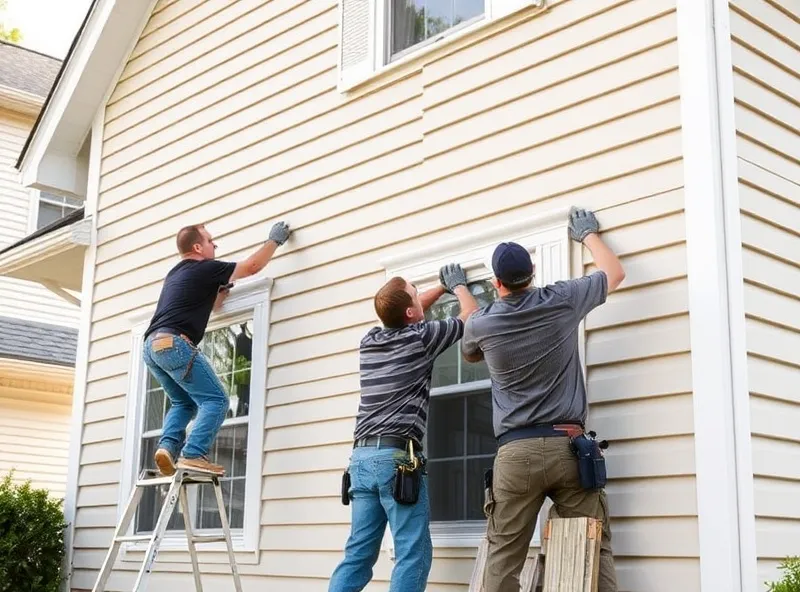
Siding Contractors
Siding that holds up to Blue Ridge weather.
Vinyl, fiber cement, engineered wood and natural wood siding from experienced local contractors. Free estimates, no obligation.
Siding That Stands Up
Siding that has pulled away, cracked or rotted does more than look tired. It lets water reach the sheathing, invites insects, and raises the cost of every heating and cooling season in Lynchburg.
Summer humidity and winter freeze-thaw cycles work on every gap. Blue Ridge Home Pro does not install siding. We connect Lynchburg homeowners with independent local siding contractors whose licence and insurance have been verified before referral. You deal directly with the installer, and you compare their written quotes yourself.
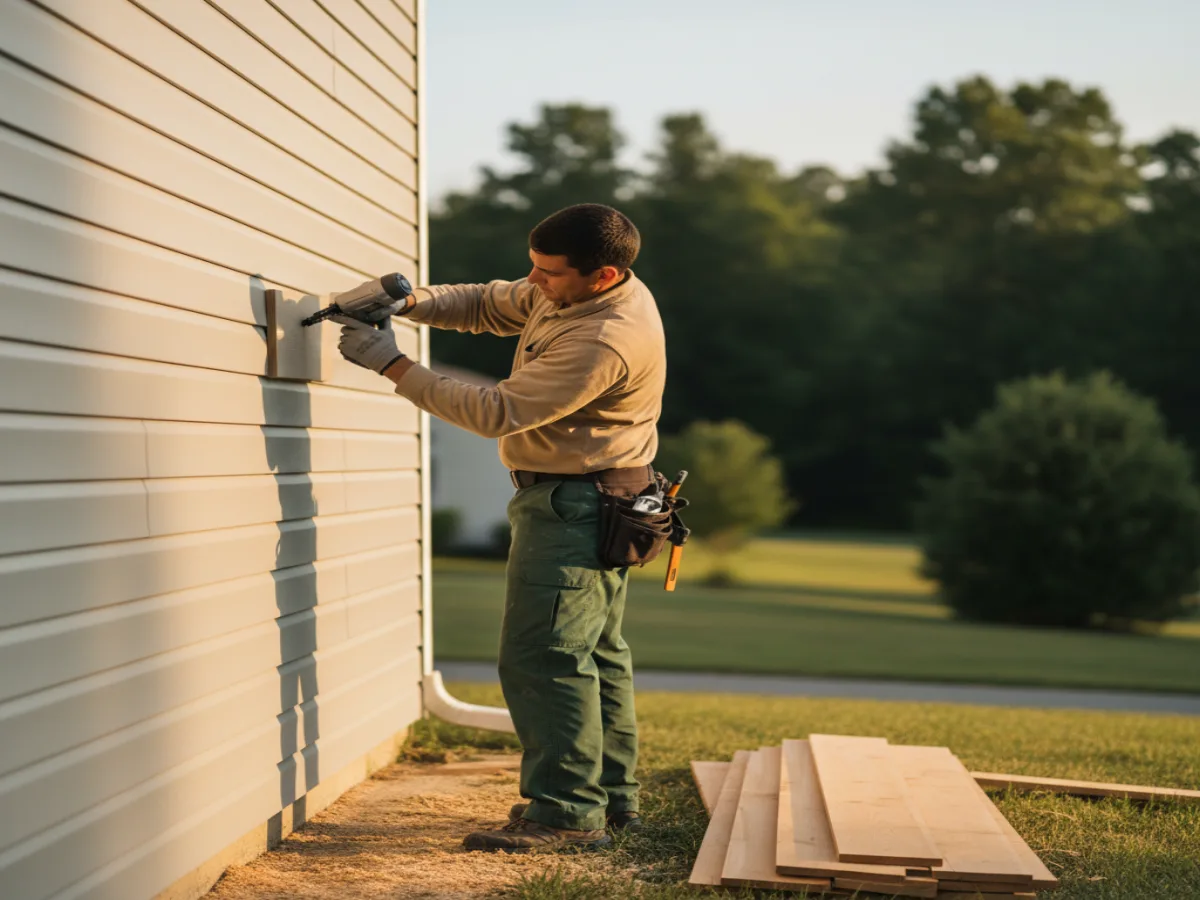
Built for This Climate
- Vinyl, fiber cement, engineered wood and composite options
- Licence and insurance verified before referral
- Proper moisture barrier and flashing installation
- Colour matching for partial replacements
- Sheathing inspection before quoting, not after
- Manufacturer warranty support
- Free on-site estimates
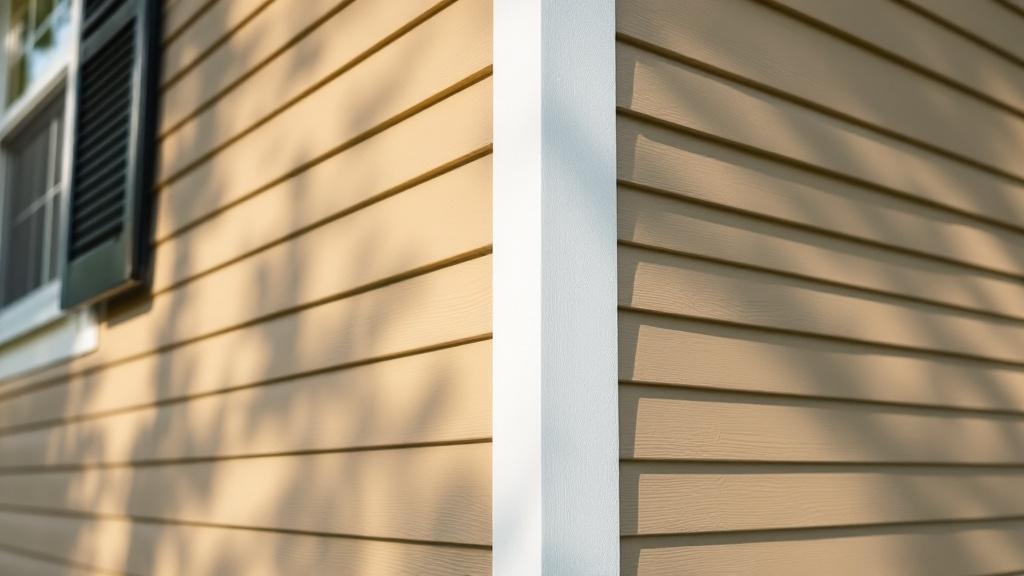
Siding Materials for Blue Ridge Weather
Installed costs below are from Hover, published January 2026, and are national figures. The spread inside each material is mostly grade and trim detail rather than region.
Vinyl · $4 to $12 per sq ft
The most common material in Lynchburg and across Campbell County. It does not absorb water, so it handles humidity well, but hail can crack or dent panels and repeated freeze-thaw makes old vinyl brittle. Expect 20 to 40 years depending on grade and exposure. Ask about insulated vinyl if you want a modest thermal improvement.
Fiber Cement · $6 to $15 per sq ft
The material most contractors here will raise first for foothills weather. It resists moisture, rot, hail and insect damage better than wood or vinyl, holds paint longer through humid summers, and does not warp in freeze-thaw. Expect 30 to 50 years. It suits older homes that want a wood look without wood upkeep.
Engineered Wood · $7 to $12 per sq ft
Looks like natural wood but is manufactured with resins and waxes for better moisture resistance. Central Virginia humidity still demands proper sealing at every cut edge, hail can dent it, and freeze-thaw will find any exposed edge. Expect 20 to 30 years. Wood grain at a lower price than cedar.
Aluminium · $6 to $10 per sq ft
On many mid-century Lynchburg houses already. It does not rot and handles humidity well, but it dents easily in hail and can chalk or fade. Expect 30 to 40 years. Colour matching on a partial repair is genuinely difficult, which is the usual reason a whole elevation gets replaced.
Natural Wood · $2.25 to $15 per sq ft
Often the original cedar or pine on older city homes. Beautiful, and it demands the most care in this climate: humidity, hail and freeze-thaw all work against it. Expect 15 to 30 years with diligent painting and sealing. The wide cost range reflects everything from rough board to milled clapboard. Usually the right answer in a historic district where like-for-like is required.
What actually moves your quote
Wall area and number of stories set the labour. Trim, corners, gables and dormers add detail work that a per-square-foot figure hides. And sheathing repair found once the old siding is off is the line item that most often turns a quoted price into a higher final one. A quote that prices that possibility is more honest than one that does not.
When a Patch Is Enough
A few cracked or loose panels do not always mean a full replacement. What is behind the panel decides it.
Isolated damage from a fallen branch or a single hail strike can often be repaired. The contractors we refer you to will look behind the panel first. Rot in the sheathing, soft spots around windows, or widespread warping across multiple walls usually points to replacement. Chalking on vinyl is a surface sign of age, and if the panels are still sound, a repair may buy you a few years.
Moisture in the sheathing is the line most installers will not cross. Once water has reached the structural layer, patching the outside hides the problem instead of fixing it. When you ask for a repair quote, ask whether it includes a sheathing inspection or only panel replacement. Those are different jobs at different prices.
Partial replacement works when the damage is confined to one elevation and the existing product is still made. Colour matching is the hard part. Vinyl fades, aluminium chalks and wood weathers, so a patch that looks close in the store can look wrong on a Lynchburg wall in full sun. If no close match exists, redoing that whole elevation is often the better call.
Siding on an Older Lynchburg Home
Homes in the city core carry a different set of rules, and a different set of surprises.
Federal Hill, Diamond Hill, Garland Hill and Rivermont are designated historic districts. If your house sits in one, exterior work that changes appearance may need a Certificate of Appropriateness from the Lynchburg Historic Preservation Commission. Like-for-like repair is treated as a minor action, which is a simpler path than a full material change. Replacing rotted wood clapboard with new wood clapboard of the same profile usually moves faster than swapping wood for vinyl.
Original wood siding on a pre-war house is often old growth pine or cedar. It has lasted this long because it was installed well, but decades of humidity, hail and freeze-thaw have taken a toll. Paint failure is common, and hidden rot behind the bottom courses is usually worse than it looks from the street. A contractor should probe the sill and corner boards before quoting.
Lead paint is a real concern on any home built before 1978. Disturbing old siding can release lead dust, and a contractor working on those surfaces should be following the federal Renovation, Repair and Painting rule, including containment and cleanup. Ask about it before work starts, not after.
Many older homes now wear aluminium or vinyl over the original wood. Removing that outer layer sometimes reveals intact clapboard and sometimes reveals rot that was covered rather than repaired. Nobody knows which until the old siding comes off, so a good contractor prices for that possibility instead of promising a fixed number before inspection.
Moisture, Housewrap and Flashing
In this climate the best material fails if the layer behind it is wrong. This is the part of the job you cannot see and cannot inspect later.
Lynchburg gets heavy summer thunderstorms, high humidity and winter freeze-thaw. Water that gets behind siding needs a path out. Housewrap is the weather-resistant barrier that sheds bulk water while letting vapour escape. It has to be lapped shingle style, taped at the seams, and integrated with flashing at windows, doors, roof intersections and every penetration.
Flashing is not optional. Head flashing above windows and doors directs water away from the opening. Side and sill flashing keep wind-driven rain off the sheathing. Without a working drainage plane, water sits against framing, and that leads to rot, mould and insect damage no siding panel can stop.
When it is done wrong the signs arrive slowly: paint bubbling, soft sheathing, a musty smell inside a wall, siding that warps along the bottom course. The written quote should describe the housewrap and flashing plan. If a quote lists only panels and fasteners, ask what happens behind them, because in this climate the hidden layer is the actual siding system.
How to Vet a Siding Contractor in Virginia
Virginia ties the licence to the value of the job, so the question is never simply whether someone holds one.
Class C
A single project over $1,000 and under $30,000. Covers repairs and many single-elevation jobs.
Class B
$30,000 to under $150,000. Where most full-house replacements land, especially in fiber cement.
Class A
$150,000 or more. Rare for a single house, common for multi-building work.
Under Code of Virginia section 54.1-1100, a licence is required once a single project exceeds $1,000 including labour and materials. Match the class against your own quote: a $12,000 repair needs only Class C, while a $45,000 full replacement needs Class B. Ask for the number and verify it yourself through the Virginia Department of Professional and Occupational Regulation.
What the written quote should itemise. Materials and the specific product line. Removal and disposal of the old siding. Housewrap and flashing. Trim and corner detail. Sheathing repair, with a rate per sheet if rot is found. A start and completion window rather than a vague estimate.
Insurance matters as much as the licence. Ask for general liability, confirmed current rather than claimed, and workers compensation, which Virginia requires at three or more employees. Ask for the certificate, not the assurance.
Walk away signals. Full payment demanded up front. Refusal to put the scope in writing. A flat claim that no permit is ever needed, without checking your jurisdiction. In a Lynchburg historic district, work may also need a Certificate of Appropriateness before the permit.