Roofing Contractors
A roofer you won't have to chase down.
Roof repairs, full replacement, and new roofs from experienced local contractors. Asphalt shingle, architectural, and metal. Free estimates, no obligation.
Protect Everything Under Your Roof
A failing roof in Lynchburg does not announce itself all at once. It starts with a damp spot on a bedroom ceiling, a few granules in the gutter, or a shingle lifted by a summer thunderstorm. Left alone, small problems move into the decking and the framing.
Water follows the path of least resistance, and in a house with older plaster and wood, that path can be long. Blue Ridge Home Pro does not install or repair roofs. We connect Lynchburg homeowners with independent local roofing contractors whose licence and insurance have been verified before referral. You deal directly with the roofer. We help you start that conversation with a clearer picture of what your roof needs.
Roofing Done Right the First Time
- Repairs, full replacement, and new roofs
- Asphalt shingle, architectural, and metal options
- Licence and insurance verified before referral
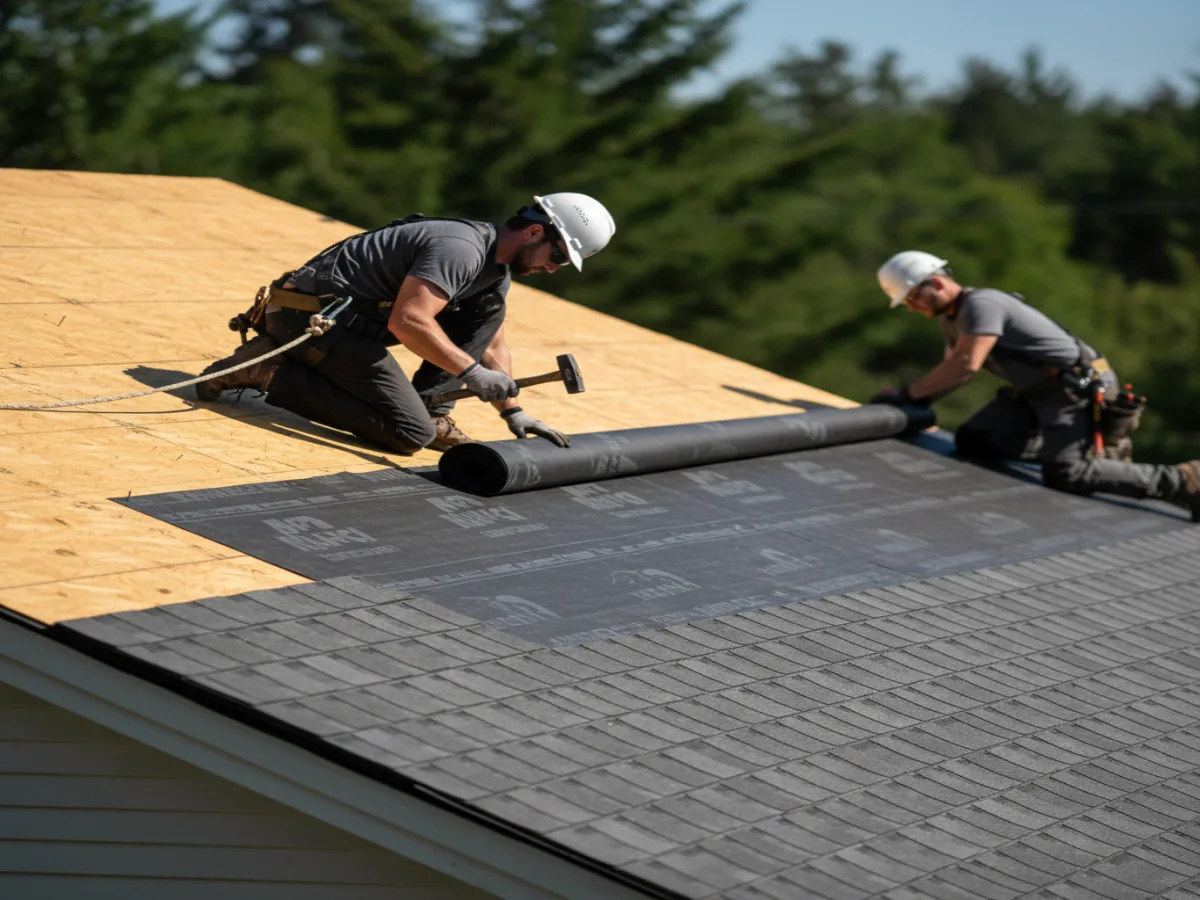
- Proper underlayment, flashing, and ventilation
- Storm and leak damage assessments
- Manufacturer warranty support
- Free on-site estimates
Knowing Which One You Actually Need
Most Lynchburg roofs need repair long before they need replacement. The decision comes down to age, extent, and what you can see from the ground or a ladder.
Start with age. A three-tab asphalt roof in central Virginia often lasts 15 to 20 years. An architectural shingle roof can last 25 to 30. If your roof is past three quarters of its expected life and the damage is widespread, patching is a short term fix on a problem that is coming back.
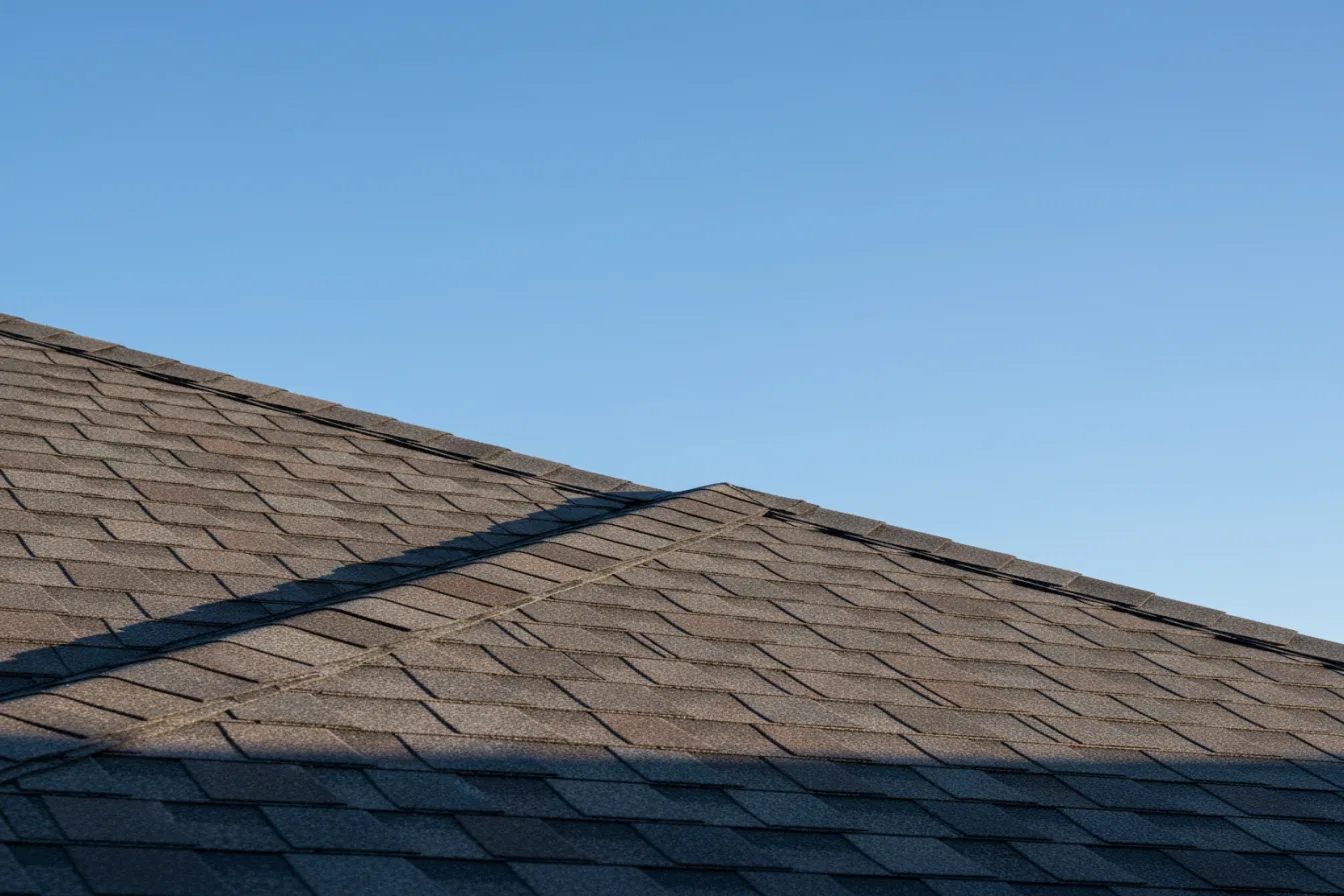
Look at the shingles. Curling, cracking or missing shingles in one small area usually point to repair. Granule loss across the whole roof is different. If you see bare patches on shingles or find grit in the gutters after every rain, the surface is wearing out evenly. That is a replacement signal.
Check the roof plane from the street. A sagging line between rafters means the decking may be wet or compromised. That is not a patch job. Repeated leaks in different rooms also suggest the underlayment is failing rather than one flashing point.
When patching stops making sense, the contractors we refer you to will say so. A good roofer will show you the damaged decking, the failed flashing or the worn shingle surface before recommending replacement. You should expect that evidence, not a sales pitch.
If you are still weighing it up, our repair or replace decision guide goes further: the warning signs worth acting on, how long each roofing material actually lasts in Blue Ridge conditions, why chimney flashing causes so many leaks here, and what to do before filing a storm claim.
How Each Material Holds Up Here
Virginia's mix of summer heat and humidity, heavy thunderstorms and winter freeze-thaw is hard on a roof. The right material depends on your home, your budget, and how long you plan to stay.
Three-Tab Asphalt
The budget standard, lighter and flatter than architectural. Expect 15 to 20 years of service in central Virginia heat and humidity. Suits rental properties, shorter-term ownership and tight budgets. The flat profile also fits some mid century homes.
Architectural Shingle
The regional default for Lynchburg and the surrounding counties. The layered construction handles wind and hail better than three-tab, and expected life here is 25 to 30 years. This is what most referred contractors will quote first for a single family home in Forest, Bedford, Amherst, Rustburg, Boonsboro or Campbell County.
Standing Seam Metal
Sheds rain and snow quickly, which matters on steeper Blue Ridge slopes and rural properties with long roof runs. Properly installed, 40 to 60 years in central Virginia. Suits homeowners who plan to stay, plus detached garages, barns and low slope sections where shingles struggle.
Natural Slate
The premium local material. Buckingham slate is quarried at Arvonia in Buckingham County, about 50 miles northeast of Lynchburg, and roofs landmarks across Virginia. Flashed correctly it lasts 75 years and beyond. Suits historic homes, and the weight requires a structural check before installation.
Metal Roofing in the Blue Ridge
A practical choice for many Lynchburg area homes, and especially for properties in the foothills and the rural parts of Bedford and Campbell counties.
There are two common systems. Standing seam panels use concealed fasteners and raised seams, so the fasteners are not exposed to weather and there are fewer leak points over time. Exposed fastener panels cost less, but the screws have rubber washers that age in central Virginia sun and temperature swings, and those washers need inspection and eventual replacement.
Metal sheds rain and snow faster than asphalt. On a long roof run or a low slope section, that matters. Snow slides off instead of sitting and refreezing at the eaves.
The cost premium is real. A metal roof often runs about twice what an architectural shingle roof costs, but it can last two to three times as long. The noise objection is mostly wrong: installed over solid decking with underlayment, a metal roof is not much louder than shingles in rain. On an open frame barn or porch you will hear more. The contractors we refer you to can explain which system fits your roof structure and your budget.
What a Roof Actually Costs in Central Virginia
Two Virginia cost sources published in 2026, and the gap between the state average and this part of the state.
Roof Cost Data, updated May 2026
Statewide Virginia, installed, on a 2,000 square foot roof. Three-tab asphalt $4.65 to $6.85 per square foot. Architectural shingle $5.50 to $8.10. Standing seam metal $10.75 to $15.80. Natural slate $24.15 to $35.50. It calls these planning estimates and advises comparing at least three written quotes on identical specifications.
Roof Troopers, updated July 2026
Three-tab asphalt $4.50 to $6 per square foot. Architectural asphalt $5 to $9. Standing seam or corrugated metal $10 to $18. Natural slate or clay tile $15 to $30. It puts a 2,000 square foot architectural shingle replacement at $10,000 to $18,000. Note that this guide is written from the Northern Virginia market.
The two agree closely on asphalt and diverge on the premium materials, which is what you would expect: slate and metal prices depend heavily on the specific roof, its pitch, and how much structural work the job needs. Treat the asphalt numbers as reasonably firm and the slate numbers as a wide starting point.
Roof Cost Data's figures are statewide. Roof Troopers writes from the Northern Virginia market, and that matters here. Roof Troopers notes that a comparable roof replacement in central Virginia might run $1,500 to $3,000 below Northern Virginia for the same scope of work, because labour rates, county permitting and property values all run higher up there. If you are reading a Virginia cost page and it does not say which part of the state it means, assume it is weighted toward the northern market and adjust down for Lynchburg.
What actually moves your number is your roof. Pitch changes how much of the job is safe-access work. Layers to tear off change disposal. Hidden decking rot is the line item that most often turns a quoted price into a higher final one, which is why a quote that itemises decking repair separately is more honest than one that does not. Chimneys, valleys, skylights and dormers each add flashing detail. A simple gable roof and a complex hip roof of the same square footage are not the same job.
Every published range is a conversation starter. The only number that binds anyone is a written quote from a local contractor who has been on your roof.
Storm Damage and Insurance Claims in Virginia
Central Virginia gets heavy summer thunderstorms, occasional hail, and winter freeze-thaw cycles. What you do in the first week matters to the claim.
After a storm, check the roof from the ground first. Look for lifted or missing shingles, dents in metal flashing, and debris that may have scraped the surface. Check the attic for wet insulation or water stains. Check the gutters for granules.
Homeowners insurance typically covers sudden and accidental damage from wind, hail or falling trees. It does not cover wear and tear, old age, or damage from a long term leak you did not address. If the roof was already failing, the insurer may pay only a depreciated amount or deny the claim outright. Document everything. Photograph the damage before you move anything, keep the date and time of the storm, and get a written inspection before you file if you can.
One red flag is worth naming. A contractor who offers to waive or absorb your insurance deductible is asking you to take part in insurance fraud, because the discount is usually recovered by inflating the claim. Virginia has now outlawed the practice outright: under the Residential Property Owners Protection Act, effective 1 January 2027, a contractor may not pay, waive or rebate any part of an insurance deductible. Walk away from any roofer who offers it, however casually it is phrased.
The contractors we refer you to can inspect storm damage and give you a written report for your insurer. You still file the claim yourself, and you still choose the contractor.
Permits and Historic Districts in Lynchburg
Lynchburg has designated historic districts with older housing stock, and that changes the timeline on a roof.
If your home sits in one of those districts, exterior work that changes the appearance may need a Certificate of Appropriateness from the Lynchburg Historic Preservation Commission. A full roof replacement in a different material or a noticeably different color is the kind of change that triggers review.
Like-for-like repair is treated as a minor action. Replace damaged shingles with the same material and a similar color and the process is simpler and usually faster. Change from asphalt to metal, or from slate to shingle, and expect a longer timeline, because the commission reviews the change against the character of the street and the district.
This is a planning issue more than an obstacle. A roof replacement on a historic Lynchburg home can take weeks longer than the same job in Forest or Rustburg, and the time goes to review rather than to the work. Start the permit conversation before you sign a contract. The contractors we refer you to work in these districts regularly and can tell you which changes are likely to need review and which are routine repair.
How to Vet a Roofer in Virginia
Virginia ties a contractor licence to the value of the job, so the question is never simply whether someone holds a licence.
Class C
A single project over $1,000 and under $30,000. Covers most repairs and many straightforward shingle replacements.
Class B
$30,000 to under $150,000. This is where larger metal and slate jobs, and full replacements on bigger homes, tend to land.
Class A
$150,000 or more. Rare for a single residential roof, common for multi-building or commercial work.
Under Code of Virginia section 54.1-1100, a licence is required once a single project exceeds $1,000 including labour and materials, which covers essentially any real roof job. The practical version: a roofer holding only a Class C licence can lawfully take a $25,000 replacement and cannot lawfully take a $40,000 one. Compare the class on the licence against the number at the bottom of your own quote. You can look a licence up through the Virginia Department of Professional and Occupational Regulation.
What the written quote should itemise. Materials and the specific product line. Underlayment. Flashing, including chimney and valley detail. Decking repair and the rate per sheet if rot is found. Disposal of the old roof. Start and finish dates. A one page number with no breakdown is not a quote, it is a guess you cannot check.
Insurance worth verifying. General liability, confirmed current rather than simply claimed. Workers compensation if the crew has three or more employees, which Virginia requires. Ask for the certificate rather than the assurance.
Walk away signals. Full payment demanded up front. Refusal to put the scope in writing. Pressure to sign the same day the storm damage was found. An offer to waive or absorb your insurance deductible, a practice Virginia law explicitly prohibits from 1 January 2027, and one that usually means an inflated claim. Blue Ridge Home Pro verifies licence and insurance before referral, and you should still check these details against your own quote.