Deck Builders
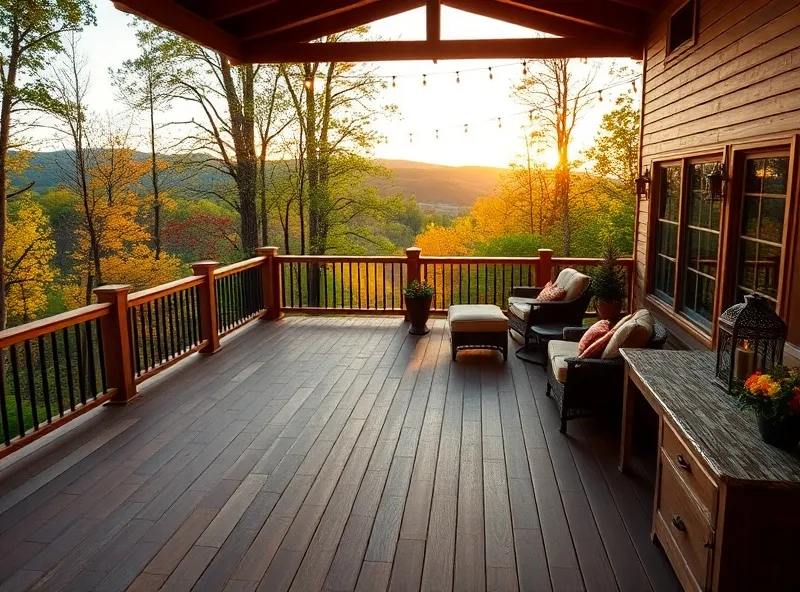
A deck built for the slope it sits on.
Custom decks, elevated builds and deck repair from experienced local contractors. Free design consultations, no obligation.
Built to Last on Blue Ridge Ground
A well built deck extends a Lynchburg home into the landscape. What separates one that lasts from one that does not is rarely the lumber. It is footing depth, flashing detail, hardware choice, and how the frame handles water.
Blue Ridge Home Pro does not build decks. We connect Lynchburg homeowners with independent local deck builders whose licence and insurance have been verified before referral. The contractor you choose does the work, and the quality of that work decides how long the deck stands.
The Frame Is the Deck
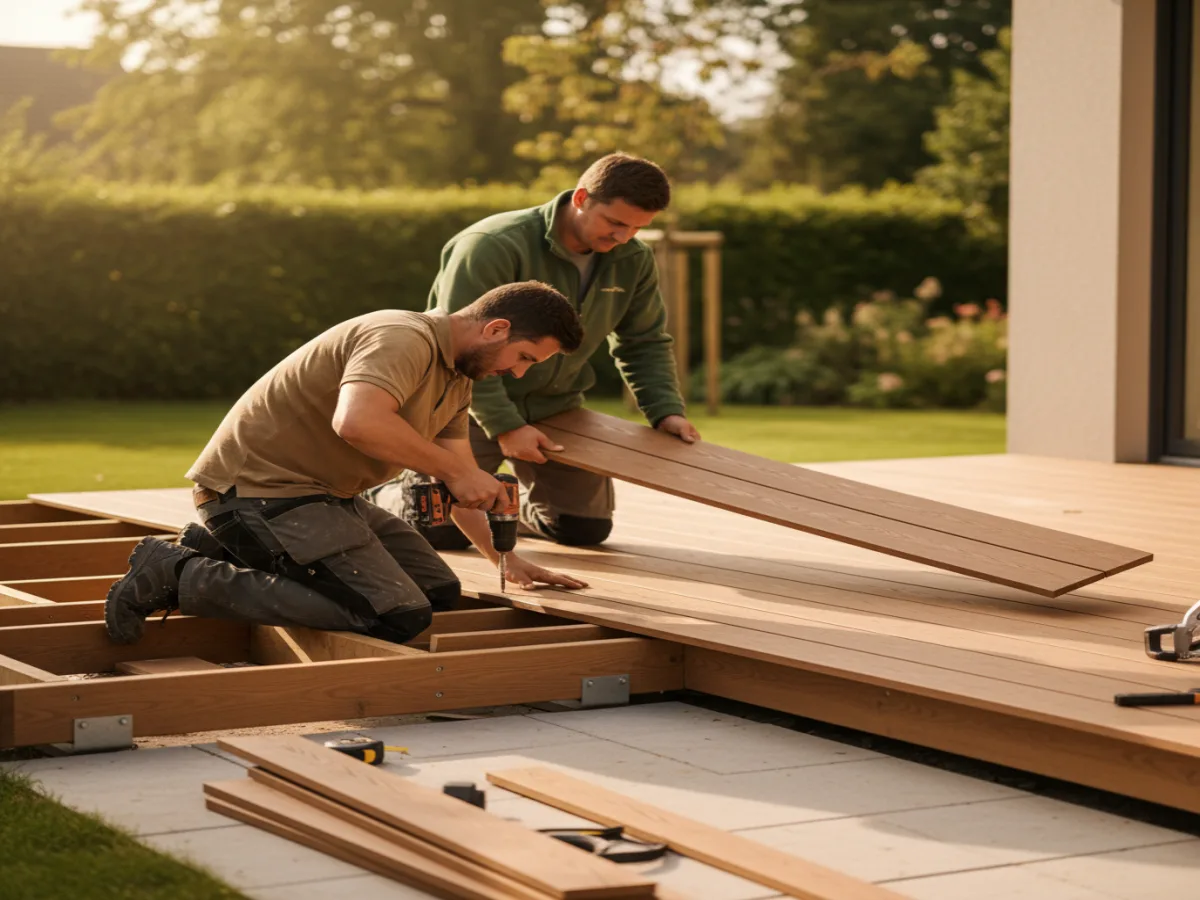
- New builds, elevated decks and full rebuilds
- Pressure-treated, cedar, composite and PVC options
- Licence and insurance verified before referral
- Footing depth to frost line, inspected before pour
- Ledger flashing done properly, not caulked over
- Deck repair and structural assessment
- Free design consultations
Decking Materials for Central Virginia
Blue Ridge Home Pro does not price deck work. Your contractor does. The figures below are published national ranges from Ergeon, updated May 2026, included so you have something to judge a quote against.
Pressure-Treated Pine · $25 to $40 per sq ft
The most common decking around Lynchburg and the lowest cost up front. Southern yellow pine takes treatment well and carries structural loads, but it moves with Virginia humidity: boards cup, check and shrink. Without cleaning and resealing every year or two the surface greys and starts holding water. Expect 15 to 20 years maintained, less in full sun or under heavy canopy.
Cedar · $30 to $50 per sq ft
Naturally rot resistant and lighter to work than pine, but central Virginia summers are hard on it. Cedar fades to silver and can develop surface cracks, and it wants cleaning and a clear sealer or stain every couple of years. It suits homeowners who want natural wood with less chemical treatment than pine and who accept the upkeep.
Composite · $35 to $70 per sq ft
Mid-grade runs $35 to $55 and premium $50 to $70. The up front cost is higher, but the maintenance load drops sharply: no sanding, no staining, and good resistance to the mould and mildew that thrive in a Lynchburg summer. The trade-off is heat, since dark boards get hot in direct sun. Expect 25 to 30 years from a quality line.
Capped Cellular PVC · $55 to $80 and up
The most moisture resistant option and the lightest board. PVC does not absorb water at all, which matters on shaded lots where leaves sit wet for days, and lighter colors run cooler than composite. The look is less convincingly wood, and the cost is at the top of the common options. Best on heavily shaded or low lying sites where water is the main enemy.
Tropical Hardwood · $55 to $80 and up
Ipe and similar species are dense, rot resistant and extremely hard, with a lifespan that can exceed 30 years. They are also difficult to work, need hidden fasteners or pre-drilling, and want oiling to hold color. A niche choice in this market, usually for homeowners who want natural wood with the lowest possible maintenance.
Why these numbers look high
Because they are installed costs for the entire structure: footings, framing, hardware, decking, railing and labour. A cost page quoting a few dollars per square foot is pricing decking boards alone. Both numbers are real and they answer different questions. Before you trust any deck cost figure, check which one it is quoting. And treat all of them as background reading rather than a price, because the only number that means anything is the written quote from the contractor who has walked your site.
Building on a Sloped or Wooded Lot
Most lots around here are not flat, and that changes the deck more than the material choice does.
Sloped and wooded sites are the norm in Forest, Bedford, Boonsboro and the hills above the James. A deck on a slope is usually elevated, which means the posts carry more load and the frame needs diagonal bracing. A deck three feet off the ground behaves nothing like one twelve feet up, and the higher it goes the more the post-to-beam connection and lateral bracing matter.
Footing depth is governed by the frost line, not by the deck surface. Central Virginia ground freezes and thaws through winter, and a footing poured too shallow will heave. On a slope that often means stepped footings with each pier at a different elevation. The footing inspection happens before the concrete is poured, and a contractor who suggests skipping it is telling you something important.
Drainage is the other slope issue. Water moves downhill, and a deck can redirect it toward the foundation if the grade is not managed. The design should account for where water goes after it passes between the boards.
On a wooded lot, roots can interfere with footing placement and heavy canopy keeps the structure damp longer, which affects both material choice and board spacing. And a walkout basement changes the design again: the deck becomes a roof over the lower level door, so it has to be flashed and drained like a roof rather than treated as a platform.
Deck Repair and When to Rebuild
The visible damage is usually not the real problem.
A failed ledger board is the most dangerous defect. The ledger is the board attaching the deck to the house, and when it pulls away or rots behind the siding the deck can separate from the structure. Water gets behind it when flashing is missing or wrong, and the rot is often invisible from outside. A repair that replaces visible boards while the ledger is soft has not fixed anything.
Rot at post bases is the second common failure, because water sits where the post meets concrete and even treated wood eventually breaks down at that joint. The fix is not always a full post replacement; sometimes a base can be cut and spliced if the rest of the post is sound. Loose railings are a separate matter: Virginia code sets a minimum railing height, and a railing that moves when you lean on it is a liability, not a cosmetic issue. Rusted or missing joist hangers let joists twist and pull away from the beam.
The repair-or-rebuild decision comes down to the frame. If footings, posts, beam and joists are sound, a surface replacement is often right, and new decking and railing over a good frame costs far less than a rebuild. If rot appears in multiple locations, or footings have moved, or the ledger is compromised, a rebuild is usually cheaper than chasing repairs. A builder who shows you the frame condition, with photos and measurements, is the one to trust with that call.
Permits, Footings and Inspections
The rules come from the statewide code, but your local building department administers them and zoning adds its own layer.
Virginia uses a Uniform Statewide Building Code, so the technical thresholds are the same in Lynchburg City as in Bedford, Campbell or Amherst County. Decks are not on the statewide list of work exempt from a permit, which covers sheds and playhouses that do not exceed 256 square feet, fences of any height unless they serve as a pool barrier, and replacement roofing, siding and same size windows. Bedford County puts it flatly: permits are required for new and reconstructed decks. The rule of thumb that a deck under 200 square feet and below 30 inches needs no permit comes from the model International Residential Code, and Virginia did not adopt it here. What differs locally is administration, fees and zoning setbacks, so confirm with your own building department before work starts. In practice the contractor normally pulls the permit, and that is the arrangement you want. A builder asking you to pull it yourself is shifting responsibility onto you.
Footings are inspected before the concrete goes in. The inspector checks depth, diameter and placement against the approved plan, and on a sloped lot will look at each pier. A final inspection follows completion, covering railing height, stair dimensions, guardrail spacing and the structural connections.
For the Bedford County process specifically, there is a fuller walkthrough in our guide to deck building permits in Bedford County, which goes into more detail than this page should.
How to Vet a Deck Builder in Virginia
Virginia ties the licence to the value of the job, so holding one is only half the question.
Class C
A single project over $1,000 and under $30,000. Covers most residential decks and repairs.
Class B
$30,000 to under $150,000. Where large elevated or multi-level composite builds land.
Class A
$150,000 or more. Rare for a residential deck.
Under Code of Virginia section 54.1-1100, a licence is required once a single project exceeds $1,000 including labour and materials. Match the class to your quote: a builder holding only Class C cannot lawfully take a $40,000 deck project. Look the number up through the Virginia Department of Professional and Occupational Regulation and confirm it is current.
The written quote must itemise the structure, not just the size. Footing depth and diameter. Post size and spacing. Beam and joist dimensions. The decking material and fastening system. Railing type and height. A quote reading only "deck, 16 by 20, pressure treated" does not tell you what you are buying. Ask for the framing specification in writing.
Insurance. General liability, and the certificate rather than the assurance. Workers compensation applies at three or more employees in Virginia.
Walk away signals. Full payment demanded up front. Refusal to put the specification in writing. Being told a permit is not needed without anyone checking your jurisdiction.