Pergola Builders
A pergola built like it belongs there.
Custom pergola design and construction, patio covers, and outdoor living spaces from experienced local builders. Free estimates.
Create Your Outdoor Retreat
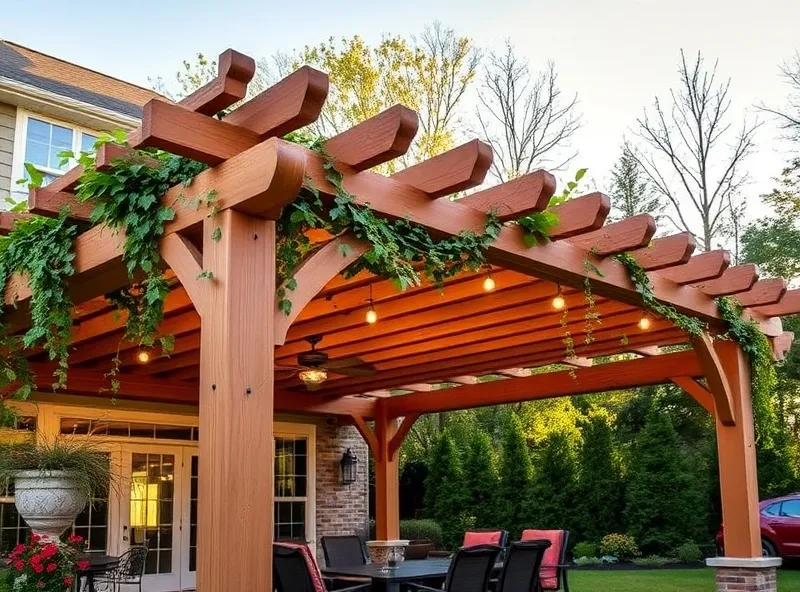
A pergola transforms your backyard into an outdoor living room. Whether you want shade over your patio, a vine-covered garden structure, or a modern aluminum louvered roof, we connect you with builders who bring your vision to life.
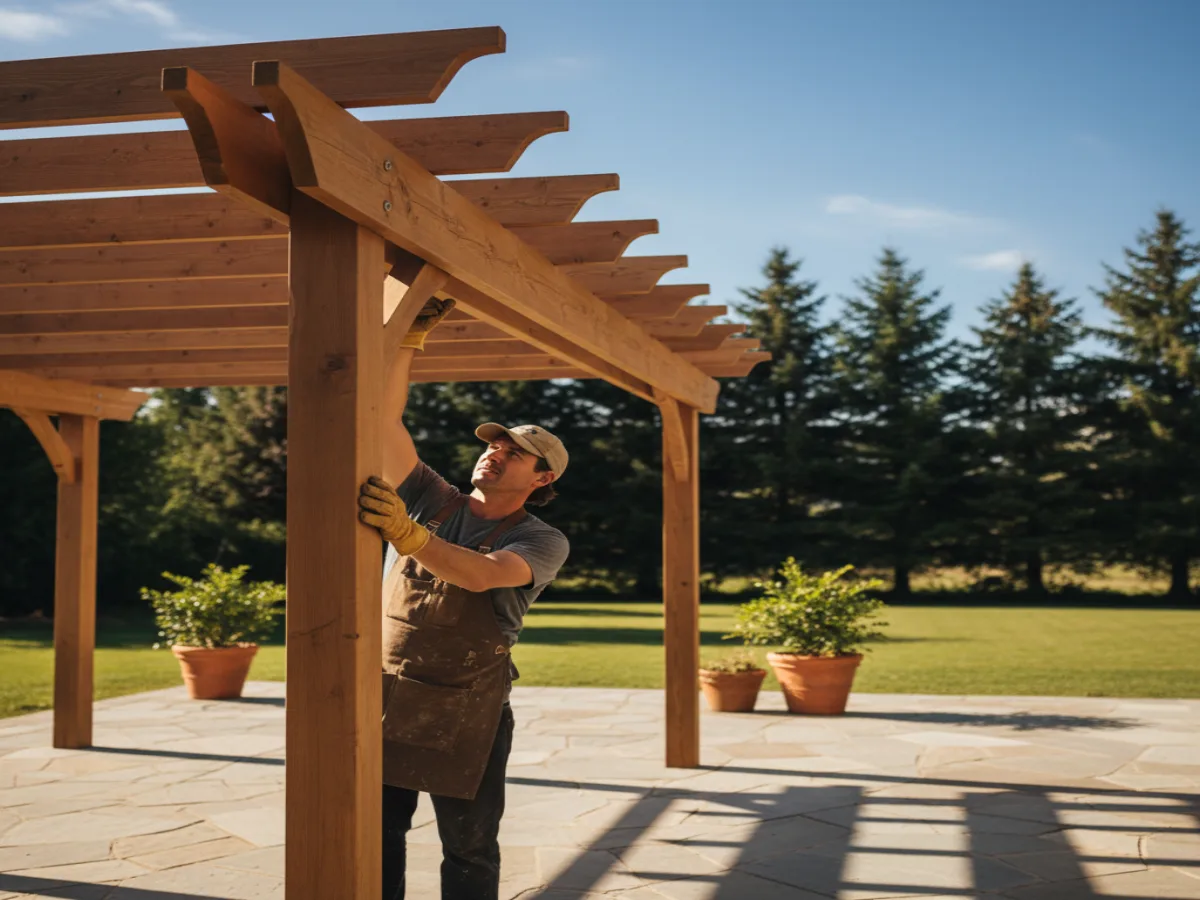
Our contractors work with wood (cedar, pressure-treated), vinyl, aluminum, and composite materials. From freestanding garden pergolas to attached patio covers, your builder designs the structure around your space.
Built for Your Lifestyle
- Custom designs for any yard size
- Wood, vinyl, aluminum, and composite options
- Freestanding or attached to your home
- Optional features: lighting, fans, curtains
- Licence and insurance verified before referral
- Free design consultations
Wood, Vinyl, Aluminum, or Composite?
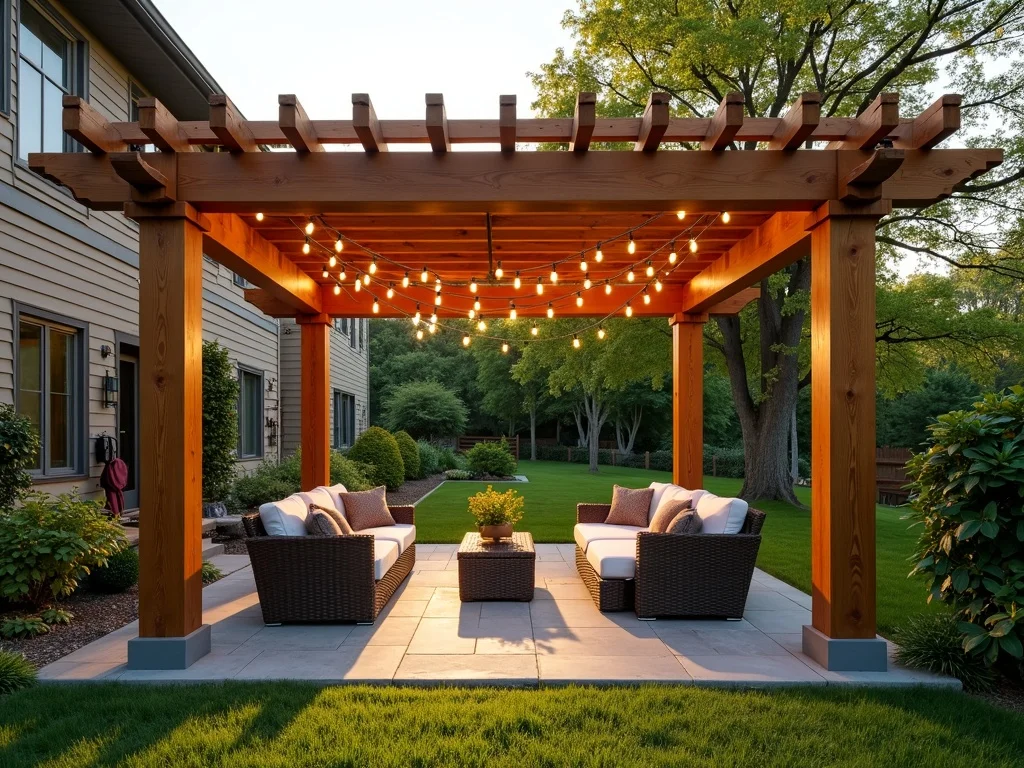
Each material has real trade-offs in the Blue Ridge climate. Here is how they compare for outdoor structures.
Cedar Wood
Beautiful, natural look. Naturally rot-resistant. Requires staining every 2-3 years in Virginia's humidity. Most popular choice in established neighborhoods. Ages to a silver-gray if left untreated.
Aluminum
Zero maintenance. Will not rot, warp, or crack. Powder-coated finish holds color for 20+ years. Modern profiles look clean and contemporary. Good choice for pool areas and high-humidity spots.
Composite
Mid-range cost, low maintenance. Looks like wood from a distance. Heavier than aluminum, not as warm as real cedar. Good balance of durability and appearance for most budgets.
What a Pergola Actually Costs in Central Virginia
Three published national sources, three wildly different answers. The gap between them is the useful part.
Bob Vila, undated
Pergola kits from $600 to $2,000, prefabricated designs $1,000 to $7,000, custom kits $10,000 to $15,000. This is the price of the thing, not the price of putting it up.
Fixr, updated 2022
$1,900 to $6,500 installed, national average $4,500, or roughly $10 to $40 per square foot. Note the date on it.
Homewyse, May 2026
$106 to $149 per square foot for wood, and this one says plainly it excludes permit fees and contractor overhead and markup, which it puts at 13 to 22 percent.
Line those up and the per square foot figures differ by more than a factor of ten. That is not one of them being wrong. It is three sources quietly answering three different questions, and the difference between them is worth more to you than any single number.
The first is a kit price, what you pay to have a box of parts delivered, with nobody assembling it. The second is an installed price from 2022, before four years of lumber and labour movement. The third is current and installed, but it stops short of permits and contractor markup, so it is not a total either. Before you trust any cost page you find, check whether it is quoting the product or the finished job, and check the date at the top.
What actually moves your number is specific to your yard. Size and span set how much material is in the frame. Material choice swings the price hard. Whether footings have to be dug and poured or an existing slab can carry the posts changes the labour more than most homeowners expect. Attached structures need flashing and a proper connection to the house, freestanding ones do not. An open slat roof, a louvered roof and a solid cover are three different budgets. Then site access for equipment, and extras like lighting or a fan.
Treat every national range as a conversation starter. The only number that binds anyone is a written quote from a local contractor who has stood in your yard.
Permits for a Pergola in the Lynchburg Area
It turns on how the structure meets your house, and on a threshold your own jurisdiction sets.
Attached pergolas usually need a permit, because they put load on the home and involve flashing where the ledger meets the wall. Freestanding pergolas below a certain footprint often do not.
That footprint threshold is set locally, and it is not the same in Lynchburg City, Bedford County, Campbell County and Amherst County. Confirm it with your own jurisdiction before anyone starts digging, not after.
The contractor you hire normally pulls the permit. If a builder wants you to pull it instead, ask why before you agree.
Permits filed by the homeowner are a common way for the person doing the work to step back from the inspection process. You want the party swinging the hammer to be the party answering to the inspector.
How to Vet a Pergola Builder in Virginia
This is the part we do before a contractor ever reaches you, and it is worth understanding whether you use our network or not.
Virginia ties a contractor licence to the value of the job. Under Code of Virginia section 54.1-1100, a licence is required once a single project exceeds $1,000 including labour and materials, which covers essentially any real pergola. From there the class matters.
Class C
A single project over $1,000 and under $30,000, or under $250,000 across 12 months.
Class B
A single project of $30,000 to under $150,000, or $250,000 to under $1,000,000 across 12 months.
Class A
A single project of $150,000 or more, or $1,000,000 or more across 12 months.
The practical version: a contractor holding only a Class C licence can lawfully take a $25,000 pergola and cannot lawfully take a $35,000 one. So the question is never simply whether the person holds a licence. It is whether the class on that licence covers the number at the bottom of your quote. You can look a licence up through the Virginia Department of Professional and Occupational Regulation.
What the written quote should itemise
Materials named by species or grade rather than just "wood". Post count and how the footings are being set. Hardware. Who hauls the debris off. A payment schedule. A start window and a completion window. A quote that is one number on one line is not a quote, it is a guess you are being asked to fund.
Insurance worth verifying
Ask for general liability, and for workers compensation if the builder brings a crew. Have the certificate sent to you by the insurance agency directly. A photocopy handed over by the contractor tells you a policy existed at some point, not that one is active today.
Walk away signals
A request to be paid in cash. A deposit larger than roughly a third of the job. No written contract. Pressure to sign the same day, especially paired with a discount that expires that afternoon. And the permit question above, where the builder wants the homeowner to file.
None of these are proof of a bad contractor on their own. Two or more together is a pattern, and the cost of walking away from a pattern is a week of your time. The cost of ignoring it is a structure you may have to pay someone else to correct.
Timeline and When to Book
Build time tracks complexity, but the wait to get on a schedule is usually the bigger number.
A straightforward freestanding structure sitting on an existing slab in Rustburg goes up fast. A larger custom build on new poured footings takes longer, because the concrete has to cure before any framing can land on it.
Spring is the busy season for outdoor construction across central Virginia, so reaching out in late summer or early autumn tends to mean a shorter queue for the same work.
Footing and concrete work is weather dependent either way. A wet stretch or a hard freeze will move a date.
A builder who promises otherwise in February is telling you what you want to hear. Ask what happens to your date if the ground is frozen the week they are meant to dig, and see whether the answer is specific.