
Published July 1, 2026 • ← Back to Blog
The first drip hit the hallway floor at 1:47 AM. By 2:15, a steady stream was filling a stockpot and the ceiling drywall had started to sag like a water balloon. The storm that rolled through Lynchburg that night wasn't even a named system, just a classic Blue Ridge summer thunderstorm with 50 mph gusts and sideways rain. But it found the weak spot in a 22 year old asphalt shingle roof and turned a "we'll get to it next year" into a 3 AM panic. The homeowner, a teacher in Forest, ended up paying $4,200 in emergency tarping and interior drywall repair before anyone even quoted a new roof. The real kicker: the signs had been visible for two years. Granules in the gutters. A slight curl on the south facing slope. A tiny water stain in the attic that "didn't look active."
Roofing decisions in Central Virginia are not abstract. They are made under pressure, after a hailstorm, during a home sale, or when a leak finally shows itself. This guide walks through what you actually need to know: when to repair versus replace, which materials hold up to Lynchburg's specific weather, how to spot storm damage, and how to hire a roofer without getting burned.
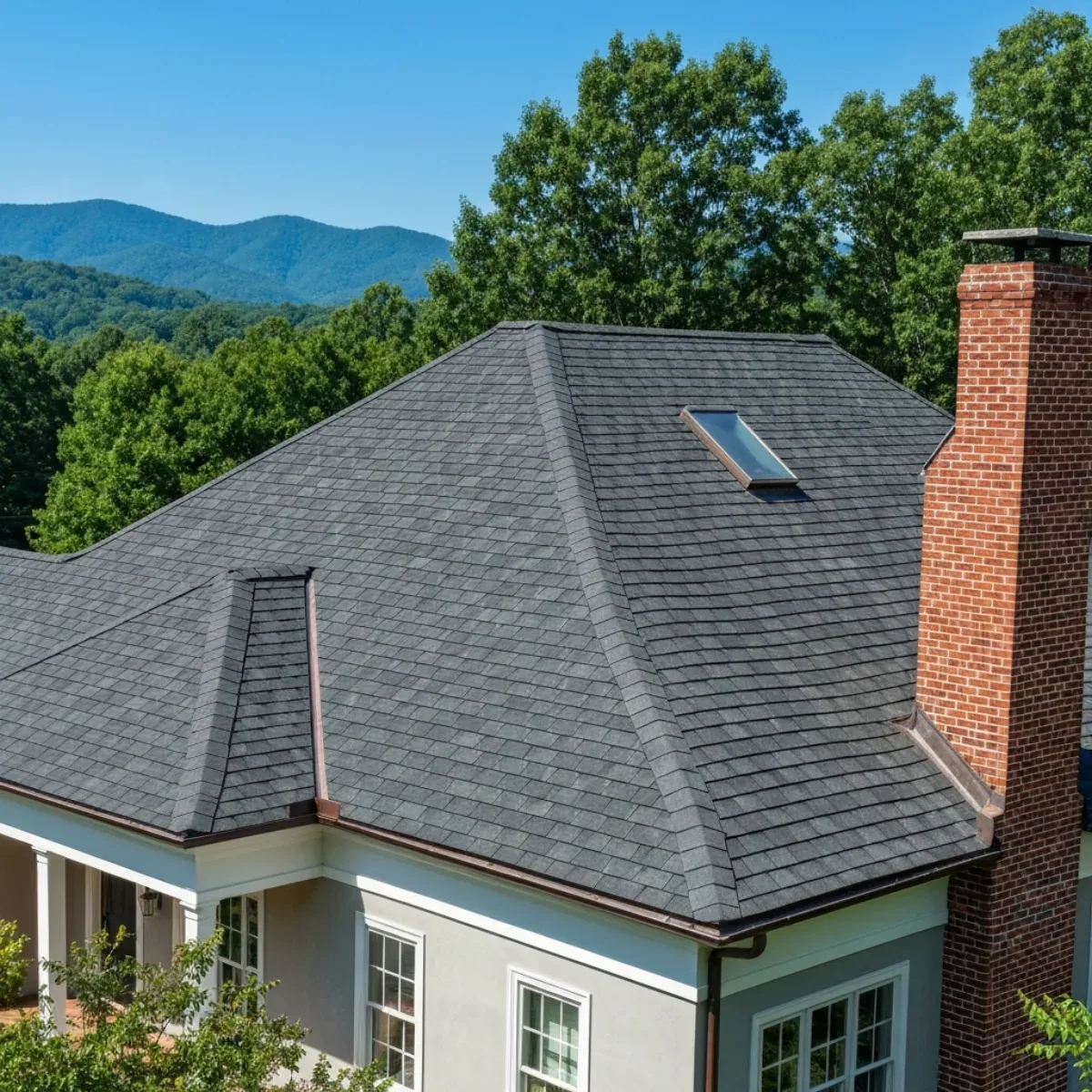
Repair or Replace: The Real Math for Lynchburg Homeowners
Most asphalt shingle roofs in our area last 20 to 25 years, but that number assumes proper installation, adequate attic ventilation, and no major storm events. In the Lynchburg area, with our freeze thaw cycles, high humidity summers, and occasional severe thunderstorms, a 25 year architectural shingle often performs closer to 20 years in practice.
A repair makes sense when the damage is isolated and the roof still has meaningful life left. Replacing a dozen shingles after a windstorm on a 10 year old roof is a reasonable $400 to $800 fix. Replacing those same shingles on a 22 year old roof is throwing good money after bad.
Here are the signs that point toward full replacement rather than patching:
- Curling or buckling shingles across multiple slopes. One curled shingle might be a fluke. Curling across the entire sun exposed side means the shingle mat is breaking down and the roof is losing its ability to shed water properly.
- Granules in the gutters and at the base of downspouts. Asphalt shingles shed granules as they age. If you clean your gutters and find what looks like coarse black sand, your shingles are losing their protective layer. On a roof nearing 20 years, this is a countdown, not a maintenance item.
- Daylight visible through the attic roof deck. Go into the attic on a sunny day and turn off any lights. If you see pinpricks or slivers of daylight coming through the roof boards, water can get through too. This means the shingle underlayment or the shingles themselves have failed.
- Multiple leaks or a single leak that keeps returning. One leak around a pipe boot is a simple flashing repair. Leaks in multiple rooms or a leak that persists after two repair attempts usually signals systemic failure.
- Sagging roof deck. This is the emergency scenario. A sagging roof plane means the plywood or OSB sheathing underneath the shingles has absorbed moisture and lost structural integrity. This cannot be fixed with new shingles alone and requires immediate attention.
Here is a good rule of thumb for Lynchburg homeowners. If your roof is over 15 years old and the repair estimate is more than 20% of a full replacement, replace the whole roof. You stop chasing leaks year after year, and you get a fresh warranty.
Roofing Materials That Actually Work in the Blue Ridge
The Lynchburg area gets everything: 90 degree heat with 80% humidity in July, ice storms in January, and the occasional derecho that flattens trees across Campbell County. Material choice matters.
Architectural Asphalt Shingles (Dimensional Shingles) $5.50 to $8.50/sq ft
This is the standard for most Lynchburg homes. They are thicker than the old 3 tab shingles, with a layered look that mimics wood shake or slate. They typically carry a 30 year manufacturer warranty and handle our weather well when properly installed.
Standing Seam Metal Roofing $10 to $16/sq ft
Standing seam metal has become increasingly popular in the Blue Ridge, especially on newer construction and higher end homes. The panels run vertically from ridge to eave with concealed fasteners, which eliminates the exposed screw problem that plagues cheaper metal roofing systems.
3 Tab Asphalt Shingles $4.50 to $6.50/sq ft
These are the older, flat looking shingles that were standard on builder grade homes through the 1990s and early 2000s. They are still available but rarely recommended for new installations.
Copper $25 to $45+/sq ft
Copper roofing is a premium choice seen on many historic Lynchburg homes, often used as an accent on bay windows, turrets, dormers, and porch roofs. It starts bright and metallic, then weathers over decades to a distinctive green patina that protects the metal beneath. A properly installed copper roof can last well over 100 years. It carries a Class A fire rating and requires almost no maintenance once the patina forms.
Tin / Terne Metal $12 to $22/sq ft
What many people call a "tin roof" is actually terne-coated steel, a historical material found on Lynchburg's oldest homes and downtown commercial buildings. True tin roofs are rare, but the term sticks. These roofs were originally installed as flat-lock or standing-seam panels. They require periodic painting to prevent rust, typically every 5 to 10 years depending on exposure. A major advantage is that old terne roofs can often be restored by cleaning, treating rust, and repainting rather than doing a full tear-off, which preserves historic fabric and saves money.
Clay Tile $15 to $30/sq ft
Clay tile roofs are uncommon in central Virginia but do appear on some Spanish, Mediterranean, and eclectic historic homes in Lynchburg. Tiles are fired from natural clay and can last 50 to 100 years. They are completely fireproof and resist rot and insects. The main practical concern is weight: clay tile can weigh 600 to 1,500 pounds per square (100 square feet), so the roof structure must be evaluated and often reinforced before installation. Tiles are also brittle and can crack if walked on incorrectly.
Wood Shakes and Shingles (Cedar) $10 to $18/sq ft
Wood roofing, usually Western red cedar, was common on certain period homes in Lynchburg and is still the expected material in some historic district reviews. Shakes are split and have a rougher texture. Shingles are sawn and smoother. Both offer a natural look that weathers to a silver-gray. In our humid climate, wood roofs are prone to moss, mold, and rot without regular cleaning and treatment. Standard cedar carries a Class C fire rating, though pressure-treated Class A options exist. Many historic districts require wood to match the original, so replacement with asphalt may not be allowed.
Natural Slate $20 to $40+/sq ft
Natural slate is one of the longest-lasting roofing materials available, with a lifespan of 75 to 150 years or more. A key local fact: much of the slate used on Virginia's historic landmarks came from quarries at Arvonia in Buckingham County, about 50 miles northeast of Lynchburg. Buckingham slate is a Virginia tradition and still available today, though it is expensive and requires a skilled slate roofer for proper installation. Slate is extremely heavy, often requiring structural reinforcement, and individual slates can crack if walked on. Finding a qualified slate contractor in our area takes effort, but the result is a roof that can outlast the building itself.
Synthetic Slate $10 to $18/sq ft
Synthetic slate (composite or polymer) mimics the look of natural slate at a fraction of the weight and cost. It is a practical option when you want a historic look but the roof structure cannot carry real slate.
Roofing a Historic Home in Lynchburg
Lynchburg is an old city with homes well over a century old and several designated historic districts. If your home is in one of these districts, exterior changes that affect appearance, including a roof replacement, generally require a Certificate of Appropriateness (COA) from the city's Historic Preservation Commission (HPC) before work begins. This applies even if you are replacing the roof with the same material.
Like-for-like repairs using matching materials and designs may qualify as a minor action. In those cases, the HPC Secretary can approve the work administratively without a full commission hearing. Major changes, such as switching from slate to asphalt shingles, will require full HPC review.
Approvals are judged against the Lynchburg Historic Districts Design Guidelines and the Secretary of the Interior's Standards for Rehabilitation. Both documents favor keeping or matching original materials such as slate, standing-seam metal, tin, or wood. If the original material is not feasible, the replacement must be visually compatible in color, texture, and profile.
Practical advice: check your district status early. The COA process adds time to your project, so start it before you need emergency work. Hire a roofer who has experience with historic properties and understands the HPC process. A storm-chaser who does not know the local rules can cost you delays and fines. COA applications are handled at City Hall, 900 Church Street. Blue Ridge Home Pro can match you with contractors who have successfully completed historic-district roofs in Lynchburg.
Chimney Flashing: The Most Common Hidden Leak
Many roof leaks in older Lynchburg homes do not come from the shingles. They come from failed flashing around masonry chimneys. Flashing is the metal that seals the joint where the chimney meets the roof. When it fails, water follows the chimney structure down and can show up on a ceiling far from the chimney itself.
There are two parts to proper chimney flashing. Step flashing is the L-shaped metal pieces woven into the shingles as they go up the side of the chimney. Counter-flashing is a second layer embedded into the chimney mortar joints and bent down over the step flashing. Together they create a watertight overlap. On older homes, the counter-flashing is often set in mortar that cracks and falls out over time. The metal itself can rust through, especially if it is old tin or thin galvanized steel.
When you reroof, chimney flashing should always be inspected and usually replaced. Reusing old, corroded flashing is a shortcut that leads to leaks within a few years. On historic homes with original brick chimneys, the work must be done carefully to avoid damaging soft old mortar and brick. A roofer who knows historic masonry will cut new reglet grooves cleanly and use appropriate sealants, not just smear roofing cement over the problem.
Storm Damage and Insurance: What to Know Before You File
Lynchburg and the surrounding counties (Bedford, Campbell, Amherst) sit in a region that sees regular severe thunderstorms, occasional hail, and the remnants of tropical systems that push inland. Wind and hail damage claims are common, but the process can be tricky.
What Storm Damage Actually Looks Like
Hail damage on asphalt shingles: Look for circular dark spots where granules have been knocked off, exposing the asphalt mat underneath. The spots may feel soft or bruised when pressed with a thumb. Hail damage is often most visible on ridge caps, roof vents, and metal flashing where dents are obvious.
Wind damage: Missing shingles are the obvious sign, but also look for shingles that are still in place but have broken the adhesive seal. These shingles will flap in the wind and eventually tear off. Check the ground around your home for shingle tabs after a storm.
Flashing damage: Wind can lift and bend flashing around chimneys, skylights, and valleys. This is often the source of leaks that appear far from the actual damage point.
The Insurance Claim Process (and the Pitfalls)
After a storm, you may get a knock on your door from a roofer offering a "free inspection" and promising to "handle your insurance claim." Some of these contractors are legitimate local businesses. Many are storm chasers who follow severe weather from state to state.
Here is how to protect yourself:
- Document everything before touching anything. Take clear photos of all visible damage from multiple angles. Include date stamps if possible.
- Get your own inspection first. Hire a reputable local roofer (not the one who knocked on your door) to assess the damage and give you an honest opinion about whether it warrants an insurance claim. A good local roofer will tell you if the damage is minor enough that filing a claim doesn't make sense given your deductible.
- Never sign over your insurance benefits to a contractor. Some storm chasers will ask you to sign an Assignment of Benefits (AOB) form. This gives them the right to deal directly with your insurance company and collect payment. While AOBs are legal in Virginia, they can leave you with no control over the claim and potentially on the hook if the insurer denies part of it.
- Be present for the adjuster's inspection. Walk the roof with the adjuster if possible, or at least have your chosen contractor there to point out damage. Insurance adjusters can miss things, especially on steep roofs or in poor lighting.
- Get multiple quotes. Even if insurance is paying, you have the right to choose your contractor. Get at least two detailed quotes from licensed Virginia roofers before committing.
Red Flags When Hiring a Roofer
The Lynchburg area has plenty of honest, skilled roofing contractors. It also gets visited by out of state crews after big storms. Here is how to tell the difference:
- They demand a large upfront deposit. In Virginia, it is common for reputable contractors to ask for a deposit of 10% to 30% on a roofing job, with the balance due upon completion. A contractor demanding 50% or more upfront, or full payment before any materials arrive, is a major red flag.
- They dodge basic questions about insurance or references. For a full roof replacement, Virginia law requires a contractor's license (you can verify any license free at the Virginia DPOR license lookup), and any roofer should carry general liability insurance. The real warning sign is evasiveness. A pro who will not show proof of insurance, will not share local references, or gets defensive when you ask is telling you something. Trustworthy contractors expect these questions and answer them without hesitation.
- They have no local address or references. A P.O. box or an address that traces back to a state three time zones away is a problem. Ask for references from recent jobs in Lynchburg, Forest, Bedford, or Rustburg and actually call them.
- They offer a "today only" discount. High pressure sales tactics have no place in a roofing decision. A legitimate contractor will give you a written quote valid for at least 30 days.
- They lack proper insurance. Ask for a certificate of insurance showing both general liability and workers' compensation coverage. Call the insurance provider to verify the policy is active. If a worker falls off your roof and the contractor has no workers' comp, you could be liable.
- They offer to cover your deductible. This is insurance fraud. Virginia law requires the homeowner to pay the deductible. A contractor who offers to "waive" or "absorb" it is either inflating the claim or cutting corners you will pay for later.
How Blue Ridge Home Pro Makes This Easier
We are not a roofing company. We do not install shingles, hang gutters, or climb on your roof. What we do is connect Lynchburg area homeowners with roofing contractors who have already passed our vetting process.
Every roofer in our network is:
- Vetted for quality workmanship and a proven local track record
- Carrying current general liability insurance, which we confirm before we refer them
- Backed by verifiable references from real jobs in Lynchburg, Forest, Bedford, Rustburg, Amherst, and throughout Campbell County
- Committed to fair pricing without high pressure sales tactics
When you contact us, we ask about your project, your home, and your concerns. Then we match you with a contractor who fits your specific needs, whether that is a full roof replacement on a historic home, storm damage repair, or a new metal roof on a farmhouse in Bedford County. It is the same screening we describe in our guide to hiring a Lynchburg contractor.
You get a free, no obligation quote from a vetted local pro. We never mark up the price or take a commission from the contractor. Our service is completely free to homeowners. And if your project has grown beyond the roof, our siding options guide covers how to protect the rest of your home's exterior against Blue Ridge weather.
What to Expect from a Lynchburg Roofing Quote
A proper roofing quote should be detailed and transparent. Here is what to look for:
- Scope of work clearly defined. The quote should say whether it includes tear off of the old shingles. (Never install new shingles over old ones here. Trapped moisture rots the deck.) It should also list the underlayment type, ice and water shield placement, flashing details, and ventilation improvements.
- Material specifications. Not just "architectural shingles" but the specific brand, product line, and color. This matters because different lines from the same manufacturer can have different wind ratings and warranties.
- Line items for decking repair. A good quote will specify a per sheet cost for any rotted roof decking that needs replacement once the old shingles are torn off. You won't know how many sheets need replacing until the tear off happens, but the unit price should be locked in.
- Warranty details. There is a difference between a manufacturer's material warranty (which covers defects in the shingles themselves) and a contractor's workmanship warranty (which covers installation errors). Get both in writing.
- Cleanup and disposal. The quote should include removal of all old materials, use of magnetic sweepers to collect nails from the yard, and proper disposal.
- Timeline. A typical single family home roof replacement in Lynchburg takes 1 to 3 days for the roofing crew, weather permitting. The quote should include an estimated start date and duration.
How Long Each Material Actually Lasts Here
Lifespan is the number that decides a repair-or-replace question, and it is the one most cost tables bury. The ranges below are what these materials typically give you in Blue Ridge conditions, which is humid summers, freeze-thaw winters and heavy tree cover on a lot of lots.
| Material | Typical Lifespan in Blue Ridge |
|---|---|
| 3 Tab Asphalt | 15 to 20 years |
| Architectural Asphalt | 20 to 25 years |
| Wood Shakes / Shingles | 20 to 40 years |
| Standing Seam Metal | 40 to 60+ years |
| Synthetic Slate | 40 to 50 years |
| Tin / Terne Metal | 50+ years (maintained) |
| Clay Tile | 50 to 100 years |
| Natural Slate | 75 to 150+ years |
| Copper | 100+ years |
Read that against the age of what is on your house now. A 22 year old architectural asphalt roof is at the end of its range, so money spent patching it is rent rather than investment. The same repair on a 9 year old roof is worth doing.
Blue Ridge Home Pro does not price roofing work, the contractor who inspects your roof does. For published cost figures with their sources and the caveats that come with them, see the cost section on our page for roofing contractors in Lynchburg. Whatever the material, the quote moves with roof pitch, stories, how many valleys and penetrations you have, and how much decking turns out to need replacing once the old layer is off.
Lynchburg Specific Considerations
Our local climate creates specific challenges that affect roofing decisions:
- Humidity and attic ventilation. Central Virginia summers are humid, and a poorly ventilated attic will trap moisture against the underside of your roof deck. This causes shingles to deteriorate from underneath, curling and losing granules faster than they should. When replacing a roof, insist on a ventilation assessment. Ridge vents paired with soffit vents create proper airflow. Powered attic fans can help in some situations but must be installed correctly to avoid pulling conditioned air from your living space.
- Ice dams on north facing slopes. Homes in Lynchburg with north facing roof planes can develop ice dams during winter freeze thaw cycles. Snow melts from the warmer upper roof, runs down to the colder eave, and refreezes. Water backs up under the shingles and leaks into the house. The solution is proper ice and water shield underlayment installed at least 24 inches past the exterior wall line in valleys, around penetrations, and along eaves.
- Tree coverage and debris. Many Lynchburg homes sit under mature oaks and maples. Falling branches can damage shingles, and accumulated leaf litter traps moisture against the roof surface. Regular gutter cleaning and trimming overhanging branches extends roof life significantly.
When to Call a Roofer Versus When to Wait
Not every roof issue requires immediate action. Here is a practical guide:
Call immediately: Active water intrusion into living space, large sections of missing shingles after a storm, a tree branch puncturing the roof, or visible sagging of the roof deck.
Schedule an inspection soon: Granules in gutters, curling shingles, missing individual shingles, small leaks that appear only during heavy rain, or a roof approaching 20 years old with no known issues but no recent inspection either.
Monitor and plan: A roof under 10 years old with minor cosmetic issues, a few lifted shingle edges after a windstorm that can be resealed, or general aging that has not yet produced functional problems.
Frequently Asked Questions
Why do so many Lynchburg roof leaks start at the chimney?
Because the chimney is where the roof plane is interrupted, and the fix is flashing rather than shingles. Step flashing and counter flashing have to be layered into the brick and woven into each shingle course. Roofing cement smeared over the joint looks like a repair and fails within a couple of seasons. If a leak shows up near an interior chimney chase, suspect the flashing before you suspect the shingles. For published cost figures with their sources, see the cost section on our page for roofing contractors in Lynchburg.
When should I replace my roof instead of repairing it?
Replace rather than repair when your roof is over 15 years old and the repair estimate is more than 20 percent of a full replacement, or when you see curling across multiple slopes, granules filling the gutters, daylight through the attic deck, or a sagging roof plane. Isolated damage on a newer roof is worth patching.
Do I need a permit or special approval to reroof a historic Lynchburg home?
If your home sits in a designated historic district, a roof replacement that changes the exterior appearance generally requires a Certificate of Appropriateness from the Lynchburg Historic Preservation Commission before work starts. Like-for-like repairs with matching materials often qualify as a minor action the HPC Secretary can approve administratively.
How do I check if a Lynchburg roofer is licensed?
Virginia requires a contractor's license for any roofing job over $1,000. You can verify any license free at the Virginia DPOR license lookup. Also ask for a certificate of insurance showing both general liability and active workers' compensation before work begins.
Is it legal for a roofer to cover my insurance deductible?
No. Virginia law requires the homeowner to pay the deductible. A contractor who offers to waive, absorb, or eat your deductible is committing insurance fraud, usually by inflating the claim or cutting corners you will pay for later.
Get Matched with a Vetted Lynchburg Roofer
The roofer in our network is Shane Midkiff of Marathon Roofing LLC, based in Lynchburg, who covers repairs, replacement, new roofs and storm damage. You can see him and the rest of the network on our contractors page. You do not have to figure this out alone. Need an emergency repair after a storm? A full replacement quote? Just an inspection to see where your roof stands? Blue Ridge Home Pro connects you with an insured, vetted local roofer who has a proven track record in the area.
We serve homeowners throughout the Lynchburg area, including Forest, Bedford, Rustburg, Amherst, and all of Campbell County.
Get your free, no obligation roofing quote today.
Or call us directly at (434) 218-3009. We will ask a few questions about your home and your needs, then match you with the right contractor. No pressure, no markup, no games. Just a local service helping Lynchburg homeowners make smart decisions about their roofs.